
Round table discussion with crooked gamblers
7- www.electroname.com
- 25.11.2008, 11:37
One of the so-called “steps” of the Belarusian authorities to meet Europe was organising around table discussion on activities of online media, turned out to be just a sham.
As we have informed, on November 19 Belarusian authorities sent a document to the European structures promising to make three steps on liberalisation of the situation in the country. One of these steps was to become a round table discussion “Online media: challenges of the 21th century” organised on November 24 in Minsk by the OSCE office on freedom of media, the OSCE office in Minsk and the Information Ministry of Belarus in cooperation with the Belarusian Foreign Ministry. Participants included representatives of the presidential administration, specialized ministries, leading state-run media, the Belarusian Association of Journalists, and online media journalists. They had been offered to discuss prospects of online media in Belarus, and possible adoption by the Council of Ministers of a special resolution which is to regulate the work of such media in our country.
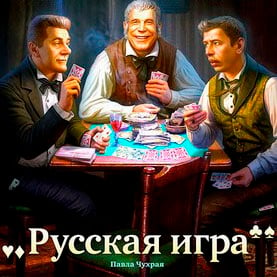
I have managed to attend this event. From the very beginning I was haunted by a weird déjà vu feeling. The pint is that yesterday RTR-Belarus TV channel showed a film “Russian game” where an Italian crooked gambler decided to go to Russia, “a country with credulous and naïve inhabitants”, in order to recover his fallen fortunes, and meets three local swindlers there. In the film the three heroes of Makovetskiy, Garmash and Merzlikin, together with the Italian “ace”, scoff at local dwellers, beat a trusting son of a rich landlord. As a result, it turns out that everyone whom the Italian met were “men of straw”, and left the Italian penniless.
And at the round table discussion in Minsk, as if they had concerted, the aide of the president, Vsevalad Yancheuski, and Head of the OSCE Office in Minsk Hans Jochen Schmidt even before the discussion started said so many things to the Belarusian TV and STV channels, that it was not clear why the problems of online media had been offered for discussion at all. As said by Yancheuski, “Internet in Belarus was, is and will be free”. The president’s aid underlined that he supports presence of different points of view in the internet. He promised that there won’t be any resolutions to infringe interests of web users, and the government would adopt only those decisions which would be asked for by the participants of the market themselves. In his turn, Ambassador Schmidt immediately offered to make amendments to the new law on mass media, which to his mind does not fully comply with the norms of the OSCE. To the question of the website electroname.com about blocking oppositional websites and social services during the court trials in high-profile cases and important events, Yancheuski unabashedly referred to technical problems of those websites.
So the roundtable discussion started in this optimistic key. Vsevalad Yancheuski addressed those present with opening remarks. He repeated the main points he told about for the BT word-for-word; promised full freedom, cheap internet services “like in other countries of the world”, absence of pressure on online media journalists and problems only for “criminals”. Roland Bless, the director of the OSCE office on freedom of media, who took the floor after him, expressed ideas of freedom and self-regulation on the Web which are rather bold even for Europe, looked as a temperate, even conservative person compared to Yancheuski.
After that Andrei Rikhter, the director of the Institute of Information legislation who had been invited from Moscow, understandably and clearly informed about “European norms of regulation of the web and practice of the post-Soviet countries”. This topic could be closed at that, as nothing could be added to that. But Natalya Dovnar, associate professor of the Journalism institute of the Belarusian State University, one of the developers of the notorious resolution of the Council of Ministers on regulation of online media, returned everybody to the earth. Her rhetoric reminded where we live. Dexterously juggling terms from the theory of journalism, Mrs Dovnar confirmed that she was not having a sure knowledge of the topic, as she couldn’t give a definition of the online media.
Basically speaking, there is a problem in giving the definition to online media. Deputy Minister Alyaksandr Slabadchuk said just like this: “There is no such definition!” He confessed that because of discrepancy of definitions of an online mass media the phenomenon hasn’t been included into the new law. The regime left a leeway for adoption of a qualified decision, and they are going to do that “by a separate rule-making document”. The deputy minister promised to make Belarus “a training range” for development of internet regulations.
Symptomatically, all speakers invited by the Information Ministry, except Yury Zisser, started their ideas with freedom on the web, and finished by child pornography and terrorists. And honorable Ihar Parmon, a deputy chairman of the “K” department, indulged in nostalgic recollections about the beginning of FIDO and special networks guarded by sub-machine gunners. He also mentioned the most important problem of the modern web to his mind, which is child pornography.
As a result, Andrei Rikhter offered the Belarusian officials to stop trying to regulate Belarusian online media and turn to more important problems.