
It’s high time to foot the bill
- 30.07.2010, 12:59
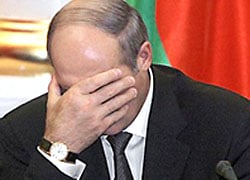
Russian money was used for creation and strengthening of the repressive state machinery and for his amusements.
It is written by the leader of European Belarus Andrei Sannikov in his blog at the website of Echo of Moscow radio station.
It was July then as well. Lukashenka was elected. Or more exactly, the second round which confirmed the victory of Lukashenka in the election, took place on July 10, 1994. Was it a victory of a politician well-known in the country, as reformist politician and a statesman? No. Not many people in Belarus knew him. He gained prominence by drafting a “corruption” report, with the help of which the then Prime Minister Vyachaslau Kebich planned to get rid of Stanislau Shushkevich and become the first president of Belarus. And the constitution of the presidential republic had been tailored specifically to Kebich.
Kebich had been in control for a little more than three years. First he was the chairman of the Council of Ministers of the Belarusian Soviet Socialist Republic, then a Premier of an independent Belarus. He came to the Council of Ministers as a reformer, but he failed to endure carrying the burden of his position of the prime minister of independent Belarus. The power made him drunk, and reformer’s energy was wasted on intrigues and struggle with Shushkevich for the first place, and then confusion started: it was not clear how to behave to the world, and how to live without getting approvals for every step from Moscow. By the time when Kebich succeeded to push through the Supreme Soviet a new Constitution and with the help of Lukashenka to remove Shushkevich from the position of the leader of the state, as the people had been tired with him. People felt unmistakably the familiar smell of stagnation. Kebich had no chances. He used administrative resources rather inappropriately or he even was his own enemy mostly.
In the first presidential elections in Belarus the people felt their power and easily refused credence to Kebich. People needed new energy and protest. People were eager to express their protest, supporting a person other than Kebich. The figure of deputy Lukashenka that was new in politics resonated expectations of people: he would save us from stagnation; her promises friendship with Russia, but we also have good relations with Europe. Choosing Lukashenka, who was an unknown deputy, is an absolute example of protest voting.
And the most important thing: by changing the existing regime and giving Lukashenka the presidential seat, the nation for the first time tried the legal mechanism of change of power in Belarus. And it worked. And there was an impression that since then we won’t allow to deceive us, and we’ll oust anyone if we would be dissatisfied with the government.
We had lots of debates about Lukashenka with my friend Anatoly Majsenya, a journalist, a political analyst, a founder of the first analytical centre in Belarus. Anatoly supported him. We will be in control of him, he said, meaning himself and like-minded persons Viktar Hanchar, Dzmitry Bulakhau. We need his vigor, and we’ll take basic things upon ourselves, Anatoly said assuredly.
After Alyaksandr Lukashenka was elected president, Anatoly Majsenya started to lose faith in his abilities to administrate the affairs of the state for the good of the nation. In September 1996 he wrote the most famous article “Belarus in the shade of night” with harsh criticism of Lukashenka and his rule. Majsenya tragically died on November 12, 1996 in the age of 35. He died in a car crash, which circumstances were not investigated by anyone properly. He died two weeks before the referendum which changed Belarus and gave rise to dictator Lukashenka.
During the referendum of 1996 the nation had faith in its force and planned to evict Lukashenka from power as Kebich previously. An impeachment was initiated for that, and almost all members of the first team of Lukashenka took an active part in it. They had understood whom they were up against. The driving force of the impeachment was Vice Speaker of the parliament Henadz Karpenka. He died in unclear circumstances in April 1999. In September of the same year Viktar Hanchar went missing. Dzmitry Bulakhau returned to Lukashenka, in April 2006 he was appointed his plenipotentiary representative in the national assembly, in September of the same year he died suddenly.
Lukashenka was rescued from impeachment by a Russian “trojka” – Yegor Stroev, Hennady Seleznyov, Viktor Chernomyrdin, who came to succour urgently. They liked an American expression about “our son-of the bitch” very much. They stressed the word “our”, and the essence of this expression is in the second part still. So Russian taxpayers found missing hundreds billions of their rubles as a result of this brotherly assistance. But we have not gained anything from the cheap oil, gas and Russian loans. Everything was wasted on creation and strengthening of the repressive state machinery of the dictator and for his amusements: parades, ice palaces, agritowns. For a long time we had been deprived a possibility to elect our leaders.
It is stupid to deny that we are responsible for our mistakes ourselves. But it is even more stupid to deny these mistakes and do nothing to rectify them. Lukashenka had received a colossal credit of trust – by the Belarusian nation, Russia and Europe. The credit’s term of validity has expired, and it’s time to foot the bill.