


Shale-Gas Boom Hits Eastern Europe
38- By Benoit Faucon, The Wall Street Journal
- 17.09.2012, 16:54
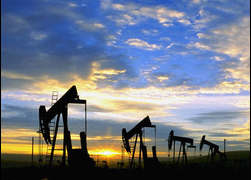
Central and Eastern Europe may be home to the next shale-gas bonanza.
Oil and gas investment is flooding into the region in amounts not seen since the fall of the Berlin Wall. Anglo-Dutch giantRoyal Dutch Shell RDSB.LN -0.41% PLC, France's Total SA TOT -0.17% andConocoPhillips COP +0.21% of the U.S. have acquired exploration rights in Poland, where current estimated reserves equal 35 to 65 years of the country's demand for natural gas, according to the Polish Geological Institute.
Ukraine is heating up as well. TNK-BP Holding, a joint venture of BP BP.LN 0.00% PLC and a group of Russian investors, plans to invest $1.8 billion in shale projects at a half-dozen sites around Ukraine. In June, Italy's Eni SpA E -0.67% paid an undisclosed amount for a stake in Ukraine-based LLC Westgasinvest, which holds about 1,500 square miles of land with potential shale-gas reserves. And Chevron Corp.,CVX +0.49% which has acquired more than 6,250 square miles of potential shale gas leases in Central Europe since 2009, says it is working with Ukraine to negotiate a production-sharing agreement.
Welcome Alternative
At least part of the region's motivation in embracing these partners is obvious: to get out from under Russia's thumb. According to a May study by consultancy KPMG, 69% of the gas consumed in Central and Eastern Europe is imported, nearly all of it from Russia. A string of disputes over transit fees between Russia and Ukraine—the main gas corridor to Eastern Europe—has pushed some countries to seek other sources of supply.
The majors are bringing with them key technologies successfully tested in North America, such as horizontal drilling and hydraulic fracturing—unlocking the gas by blasting rock with sand, chemicals and water.
But a host of obstacles stand in the way. For a start, it isn't clear that the potential supplies are as great as was initially hoped. In June, Exxon Mobil Corp.XOM -0.02% said it would halt exploration efforts in Poland after two early wells proved commercially unviable.
The Long Haul
Most companies, however, have vowed to stay.
"We have no plans to scale back our activities," says Ian MacDonald, a Chevron vice president in charge of its exploration and production strategy for Europe, Eurasia and Middle East. Mr. MacDonald estimates it will take three to five years to know whether gas wells in Eastern Europe are viable.
As in the U.S., local environmentalists have also vigorously opposed hydraulic fracturing, or fracking. The technique uses lots of water, raising fears that it will tap into scarce drinking water in some communities. The water is also mixed with chemicals, sparking fears of contaminating groundwater.
In January, Bulgaria canceled a decision to award a license to Chevron—which says its technologies are designed to prevent contamination—and implemented a moratorium on shale drilling. Romania also has put shale-gas exploration on hold, and the Czech Republic is considering a similar move.
When exploration is allowed, oil majors also have to deal with both governments and private land ownership, unlike in the U.S. where mineral rights are the sole property of the latter.
Locked In
Another challenge will be loosening Russia's grip over supplies. Moscow controls the region's pipelines. Many buyers in Eastern Europe are also locked into supply contracts of as long as 25 years with Russian gas giant OAO Gazprom—making it uneconomical in some cases to seek a new supplier.
Some estimates put the cost of exploring for shale gas much higher in Eastern Europe than in the U.S. According to Schlumberger Ltd., the oil-field-services supplier, drilling a shale-gas well in Poland costs almost three times as much as in the U.S.—or $11 million for a depth of 2,000 meters. And shale depths in Europe are on average 1.5 times greater than in the U.S., translating into the need for powerful rigs, more powerful pumps and more fracturing fluids, according to the Oxford Institute for Energy Studies.
John Avaldsnes, an oil and gas manager for Ernst & Young's European operation, warns that no one should expect shale gas to surge overnight in Eastern Europe. "It's not going to take place as a revolution, like in the U.S.," he says, "but as an evolution, slowly building up."
Benoit Faucon, The Wall Street Journal